Showing posts with label teacher life. Show all posts

Coping in the Classroom: Teachers Dealing with Depression & Anxiety


Teaching is hard.


No really... teaching is REALLY REALLY HARD.

Teaching can be so incredibly stressful, overwhelming and tiring. That stress often follows educators beyond the school day, creeps into their personal time and seeps into the cracks and crevasses and into every aspect of their lives. The stress that I'm talking about here is just the 'normal' stress that pretty much all teachers deal with. This high level of job related stress can become almost unbearable when combined with other common mental health issues like depression and anxiety.

If you're a teacher (mother/father, wife/husband... human....) who struggles with depression and/or anxiety, you are NOT alone!

According to the Anxiety and Depression Association of America, nearly 40 million American adults deal with some type of anxiety or depressive disorder. More specifically, about 16.1 million American adults are affected by Major Depressive Disorder (MDD) and depression is the LEADING cause of disability in individuals between 15-44 years of age. About 6.8 million American adults are affected by Generalized Anxiety Disorder (GAD) and women are nearly twice as likely to be affected as men. And to top it off, anxiety often co-occurs with depression! Those stats are NOT just a drop in the bucket; there are millions of people out there dealing with this!

I personally have dealt with my own anxiety and depression for more than 15 years and have only recently come to understand it better. I struggled silently for far too many years and kept my challenges a secret from most of my colleagues and friends. I felt ashamed and even felt that anxiety and depression made me a less competent educational professional. I've finally come to know, beyond a doubt, that anxiety and depression do not now, nor ever did, make me any less of a person, teacher, mother or wife; if anything, depression and anxiety have absolutely made me a stronger and more self-aware person!


For the record, the following isn't intended to be used a medical advice. I'm just sharing the coping strategies that I've found helpful over the years in hopes that something on my list might also help others. I've also included affiliate links for specific products that I personally LOVE and find helpful.

1. See a professional - Don't be ashamed to ask for help - revisit the stats above to remind yourself that you are NOT alone! If you're struggling with stress, anxiety and feeling depressed, this is where I'd start. Find a professional to talk to: a social worker, psychologist, religious counselor etc. Unless you're certain you need medication, you don't need to go straight to a psychiatrist; then, if and when the time comes for medication, a primary care doctor might be willing to prescribe and manage medication if you can't see a psychiatrist right away.

2. Fuel your body with something healthy -
  Try to remember to care for your body a little. This can be really difficult when you're sinking into depression and/or anxiety. Eat something healthy a few times a day. I strive for as much balance as I can find in this area because my first response to stress and feelings of anxiety is often to eat unhealthy, high fat comfort foods like french fries, cookies or chips or not to eat anything at all. This is where I employ things like a good multivitamin, a high quality fish oil supplement, a green food supplement and easy usually pre-packaged ready to eat (because preparing healthy food when I'm feeling lousy isn't going to happen!) healthy foods like green juice, pre-packaged salads and packs of veggies, fruit, yogurt, nuts etc. This doesn't always work, but I figure that if I eat a salad with my french fries or green juice after the chips or cookies, I'm probably better off than if I skipped the fruit and veggies all together.

3. Move your body - Research suggests that 30 minutes of exercise, 3-5 times a week can be very  helpful in the treatment of anxiety and depression; even as little as 10-15 minutes can be beneficial! I find this strategy very difficult to actually employ when I'm feeling my worst, BUT when I can get my body moving, I feel so much better almost immediately! I've used a Fitbit to track my steps and challenge myself to hit a minimum step count daily. If you can, get out of your classroom during your lunch break and talk a quick walk around the block or to your car to get your heart rate up.

4. Find someone to confide in - Once I started talking about my anxiety and depression with a few trusted coworkers, I immediately felt like a weight was lifted; I was no longer carrying around this shameful secret that no one around me knew about. On days when I'm  really struggling, I let my classroom assistant or teacher friends know and they check in on me, remind me to take an extra bathroom break or just offer a smile when the day gets crazy. Surprisingly, I don't think anyone has judged me harshly or made me feel bad about my anxiety and depression; in fact, I've come to find that many of my colleagues can relate because they have had similar struggles of their own.

5. Remember that 90% is still an A - This is often my go to strategy for when my anxiety gets bad quickly.  I've worked very hard to reframe my expectations for myself on any given day; there is only so much that I can realistically accomplish. I have come to realize that perfection isn't required to be successful, so I've lowered my expectations a bit. Realizing this has taken a huge weight from my shoulders and allowed me to spend just enough energy to finish the things that NEED to be completed and have a little energy left over for myself.

6. Do a little self-care - Find something that you enjoy and do it. Remember to care for yourself a little each day because a small bit of self-care here and there can go a long way. Somedays this means stopping for a coffee on my way to work (or simply having good instant coffee on hand at work for the days that I forget!), walking through a charming local bookshop right after work or listening to my favorite music on my commute. Other days it  means leaving my kids at aftercare a little longer so that I can walk around the thrift store or go get my nails done before I pick them up. Sometimes it means having a glass of wine and ordering takeout when I'm just too tired to cook. When I have a lot of trouble unwinding so that I can actually enjoy these fleeting moments of self-care, a cup of tea, some of this raspberry lemonade or a couple of these homeopathic tablets sometimes help.


7. Try to Think Positive - Consider starting a Gratitude Journal or choose an #anchorword to focus on. Centering your thoughts on something that you're grateful for can be helpful for some; writing down and coming back to the things you're thankful for can remind and retrain your brain to focus on the positive rather than the negative feelings that you're coping with internally. I started #anchorwords to help refocus my thoughts on productive and positive things rather than the chaos that my anxiety was stirring up. Check out my posts on #anchorwords for more ideas.


Do you have any other suggestions to add to the list? Feel free to comment!

Montessori on a Budget


Even if you’re a Montessori newbie, I’m sure that you already know that starting Montessori classroom or homeschool program can become pricey very quickly! Authentic Montessori materials are made from high quality and sturdy materials, making them a somewhat hefty investment right up front. Some materials can be homemade relatively easily if you have a little skill with some paint, glue and sandpaper, while other materials take a bit more elbow grease and a moderate skill set with power tools. I’m not especially skilled with power tools, but know my way around the craft store pretty well and can spray paint just about anything!

In addition to classic Montessori materials that make up the foundation of a Montessori program, a variety of other materials are needed to supplement and deepen the opportunities for learning. Supplemental materials can be purchased from companies providing Montessori materials, but often at a high cost. In my experience I’ve found that many supplemental items can be purchased cheaply from thrift stores, big box stores, yard sales and other less obvious sources if you can think creatively!

Check out my favorite was to Montessori on a Budget:


Dollar Store Montessori: Top Ten


Even if you're new to Montessori, you probably quickly realized that Montessori isn't cheap! I'm always on the look out for items to use in my classroom and finding things that don't break my bank account are awesome! Here are my top ten Montessori items that I usually find at my local dollar and discount stores. 


1. Plastic Trays - The dollar store usually has tons of different tray options that are perfectly sized for young children to hold and carry. Since many Montessori activities are presented on individual trays, it’s important to have lots of trays available. I also like to color coordinate with seasonal themes, so when I find a try that I LOVE, I usually buy several of each in every color that they have (ugh!). Look for clear plastic trays in the party section and colored plastic trays in the kitchenware section.

2. Plastic Baskets - While I personally love natural baskets, I simply cannot find enough of the same basket at a low price to effectively organize materials, especially in the language area. Dollar stores often carry a large selection of  plastic storage containers and colored plastic baskets that are perfect for organizing language materials and math manipulatives.

3. Plastic Bowls - I’ve had a difficult time finding large enough plastic bowls for mixing, washing and scrubbing activities or have found containers that are large enough, but were way to pricey for me to purchase. I’ve luckily found some very large bowls, buckets and basins in multiple colors at dollar stores near my school.

4. Small Glass Bowls-  I use tons of small bowls to hold various manipulatives when setting up tray works. I’ve found several size variations of small glass bowls in the kitchenware section and they usually come in packs of 3 or 4 at a time which is perfect when we accidentally break a few each month.

5. Colored Sand - In the floral section, I frequently find colored sand in small bags which is perfect for my sand writing tray. I switch out the color of sand about once a month – sometimes I add glitter to the sand to make it more fun.


6. Napkin Holders - I am fully aware that this seems like kind of an odd item to have on my list, but really the small plastic napkin holders are perfect for holding extension worksheets or recording pages right next to the activity. They hold the papers upright and keep them neat and organized.

7. Tweezers/Tongs/Grabbers - There are so many different variations on the tongs/tweezers and grabbers that are available. I’ve consistently found sets of several types of tweezers in the health and beauty section as well as various size tongs in the kitchenware section. On occasion, I’ve even been lucky enough to score chopstick like grabbers in multiple colors!

8. Manipulatives - The dollar store is a great place to find a variety of manipulatives for tray works from dry rice or beans to tiny erasers and craft materials. Super for practical life and math centers! I recently found plastic 'gems' in several different colors... 

9. Sponges & Cleaning Supplies- Since every wet work needs a sponge, I'm always looking for a variety for colors to match to my works - I've found great variety in colors at dollar stores and you often get 2-4 sponges for only $1. I've also been lucky enough to find small dust pans and brushes, scrub brushes and dish brushes in multiple styles, shapes and colors which are perfect for many practical life works. 

10. Seasonal Items - Since I switch out my trays monthly and follow seasonal holidays and trends, I'm constantly on the lookout for seasonal specialty items that can be pretty pricey at other stores. I stock up on seasonal 'party favors,' and small decor items for use in various classroom activities. I recently purchased several different types of Easter eggs, easter grass, small blue eggs and some flower shaped gems that will be useful in my practical life and math activities in the coming weeks.
BONUS Idea - 
11.  Unique Containers - I have a basket of various containers for opening, closing and putting small objects in and out of as a fine motor activity. I'm always on the lookout for interesting little containers to keep this activity new and exciting for my students. I've found so many small containers that open in a variety of ways at the Dollar Store - check out the seasonal candy section for little tins, seasonal shaped containers and interesting boxes. The health and beauty section also has many options. And look for coin purses and little zipper bags near the makeup or by the checkouts.


#anchorword RECHARGE


The end of this school year really seemed to hit me like a ton of bricks! Life felt like it was moving at break-neck speed and the moment that one task was completed on my to-do-list, five other pressing tasks seemed to magically appear. As soon as school was out, the to-do-list of tasks just continued at home. For the first weeks of break, I was constantly busy catching up on tasks that I simply didn't have the time to keep up with during the school year. Three weeks into break, I still didn't feel like I've rested or recharged my batteries much. Since I head back to teach summer school soon, I really needed to find a way to recharge!


It took me a little time, but I finally retreated from my endless 'to-do' list at home and have settled into a holding pattern of doing as little 'real work' as possible, spending time with my family, reading, drinking iced coffee on the porch, going to the pool, visiting family, barbecuing on the grill.... It feels nice... but now I have less than a week before I'm back at summer school. If only time would slow down a little...


As teachers (and moms, dads, husbands, wives...), we often become so focused on taking care of others that we forget about taking care of ourselves. *raises hand* I'm guilty of putting everyone first and forgetting to care for me. Recharging our own batteries is vital to our ability to engage fully at home and at work. Think about what the flight attendant says in their pre-flight safety speech: "Place the oxygen mask on yourself first, before helping small children or others who may need assistance." I try to think of self-care as my oxygen mask; with out oxygen, I can do nothing.


Here's your reminder (and permission) to take care of yourself. Recharge your batteries; put on your oxygen mask first!



How do you #recharge your batteries and relax?


A Few of My Favorite Books: Gail Gibbons

 (Affiliate links included for your convenience)

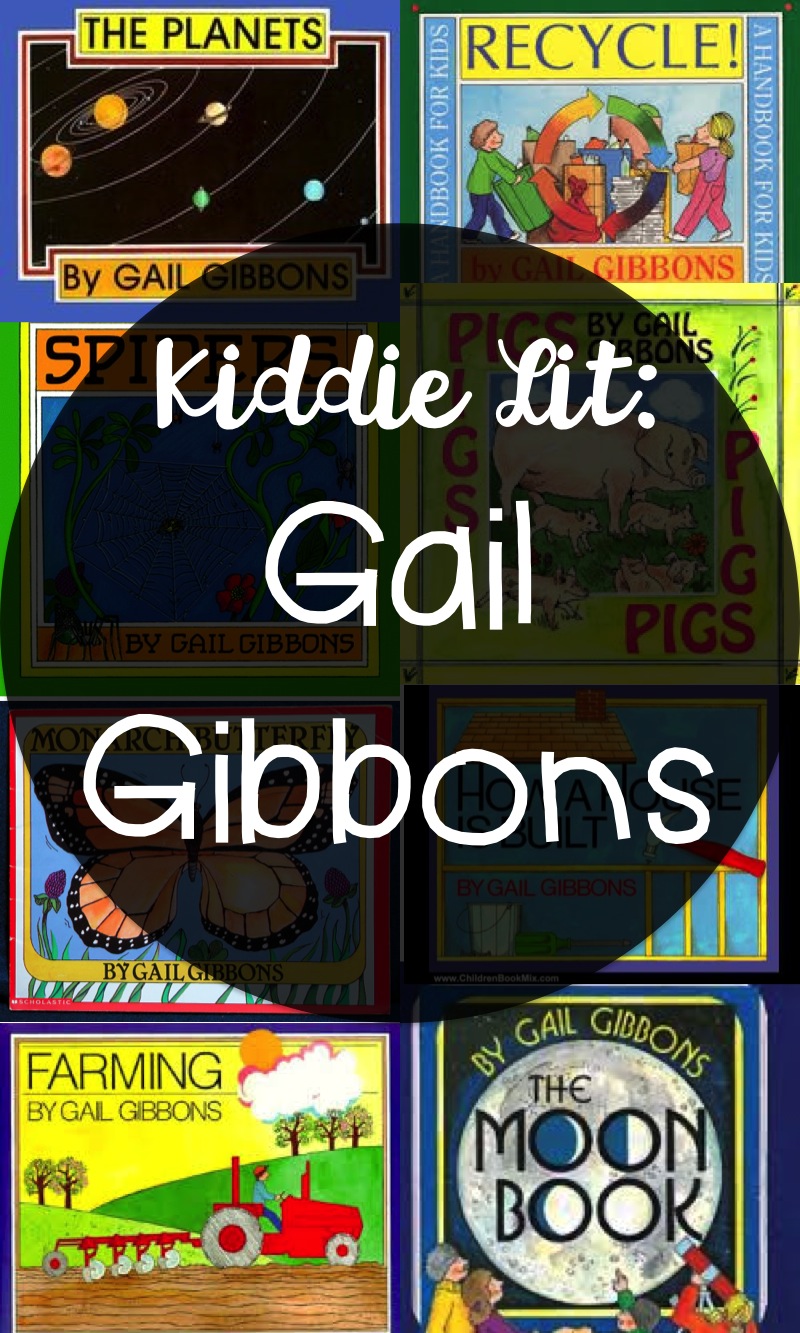
I absolutely LOVE books by Gail Gibbons! She writes and illustrates amazing non-fiction picture books for young children on a wide variety of topics. I love these books so much that I have my very own personal collection of Gibbons’ books that I rarely let my students or my son touch.


I especially enjoy her holiday books that simply explain the origin of the holiday and associated traditions. Some of her other books delve deeply into a single topic such as Bats, Recycling or Weather and provide a great deal of detailed, but child friendly information on the topic. Her books usually appeal to a wide age range from early childhood through elementary school. I have found Gibbons books to be a rich supplement to early childhood and elementary school science and social studies activities and they align easily with the non-fiction literature common core standards (bonus!).

Here are a few of my favorite Gail Gibbons books for Spring:

From Seed to Plant
Monarch Butterfly

Spiders

The Honey Makers

Frogs 

Easter


St. Patrick's Day 


What's your favorite Gail Gibbon's book?


10 Ways to Build a Classroom Library on a Budget


It's no secret that teachers don't make tons of money and that they often spend their own cash to purchase classroom supplies. I can't even tell you how much of my own money goes into my classroom each year - I really should be keeping track to deduct it from my taxes, but that's an entirely different post!


Over the years, I've acquired quite a collection of children's literature, amassing 20+ file boxes of books and miscellaneous teaching materials - It's a total mess right now since our move this past summer. I would love to have it all organized beautifully on bookshelves... but it looks like this right now:

My husband HATES this collection and is constantly pestering me to get rid of some of them. I repeatedly defend my ever growing collection by try to explain that being a teacher is a close cousin of having a hoarding problem...However, I am not actually a hoarder.  Teachers just keep anything and everything that they think might be useful in their classroom...  over the next 25 years!


Back to the classroom library... So how have a created an extensive classroom library without going desperately broke?! The majority of my books have been acquired cheaply through donations, thrift stores, yard sales and school book clubs. You’d be surprised at what you might find when you make the effort to look through the stacks of books at your local thrift store or who might donate books once they know you’re a teacher trying to stock your classroom without breaking the bank.


When building your classroom library, I personally think that there are two primary challenges: knowing where to look and knowing what to look for (I'll get to my thoughts on this in another post). 

Where to Look:

1. Thrift Stores - Check out your local thrift stores for a wide selection of used children’s books a low prices – often between $.25-$2.00 each. Don’t limit yourself to just the Goodwill or Salvation Army Store, but checkout smaller thrift stores and look for lesser-known shops. Consider the area that the thrift shop is located in; some of  my best finds  have come from thrift stores located near upscale neighborhoods!

2. Consignment Sales/Stores - Consignment stores can be a good place to find books for your classroom. Often the books at consignment stores are in better condition than thrift stores, as they have to meet certain standards to be accepted for consignment. Prices at consignment stores are often a little higher than thrift stores, but still very reasonable. 

3. Yard Sales/Garage Sales/Flea Markets - Yard sale season is coming up soon! A quick outing on a Saturday morning can be very productive for a motivated teacher. I usually mention that I’m a teacher while I’m searching through a seller's books and often they'll end up being extra generous with their pricing once they know that you’re a broke teacher trying to stock your classroom. I've even had sellers simply hand over boxes of books for free just to get rid of them and know that they'll be used again!

4. Freecycle.org - Freecycle groups are located all over the United States and are specific to cities and regions. You can find a local Freecycle group by simply using Google to search your state & city. Individuals post items that they want to get rid of or items that they’re seeking to the group and people respond via email to claim, pick up and offer items. Books are usually offered as a ‘lot’ and can sometimes be poor quality and selection, but whatever you don’t want can always be Freecycled again or donated to a local thrift shop after you’ve picked through them.

5. Amazon Used Books - I absolutely love Amazon used books! You can find just about any book that you’re searching for and usually pay only a few dollars for the book - often $.01 plus shipping! I have rarely had problems with the quality of the books, but shipping is usually media mail and can take several weeks to arrive.

6. Craigslist.org - Craigslist is a great place to find things for your classroom. Sometimes retiring teachers will post their items for sale on the site and you could score a huge lot of teaching materials for cheap. Books are often offered as a 'lot,' but since you can see the items before paying for them, you'll be more likely to get books that you can actually use. 

7. Library Sales - When the library clears out extra books, they usually offer them for purchase at a very cheap price. You might be surprised what the library is getting rid of! 

8. eBay - Often times, books can be purchased cheaply by 'lot' on ebay. If you take a little time to search through postings, you might find a seller that organizes book lots by age/reading level and/or type of book. Some sellers will even take special requests and create a custom book box for you. Don't be afraid to ask! 

9. School Book Clubs - Book clubs offered through school are a great way to purchase new books at low prices. I usually save my money for special collections of books based on seasonal theme, author or audio books. When the book order flyer arrives, I feel like a little kid with a pen and a toy catalogue! You might even earn points from all of the books that your students purchase that can be applied to purchases for your classroom! 

10. Warehouse Sales - If you have a Scholastic warehouse nearby (they're located all over the country), it's absolutely worth making a drive for their warehouse sales that they throw every few months. New books can be purchased for a couple of dollars and the selection is pretty good. Make sure that you go on one of the first days of the sale for the best selection! 


BONUS!

11. Social Media - Why not harness the full power of your social media accounts?! Post a request for gently used books that would be suitable for your classroom and see what people have to offer. Who knows, you might get a huge donation from someone who was cleaning out their kids' old books! You might also look for people who are selling books on social media - this is relatively new, but there are many used book sellers on Instagram that offer hard to find books, in good condition and many will even take requests. Two of my favorite book sellers on IG are @togetherweread @retroriotreads


Any places that I left off of my list?